



Addis Ababa– The African Union (AU) has reaffirmed its unwavering commitment to supporting Somalia’s pursuit of lasting peace, stability, and self-reliance, while experts caution that the country must urgently strengthen its political institutions and security structures to avoid the pitfalls experienced by other conflict-affected states.
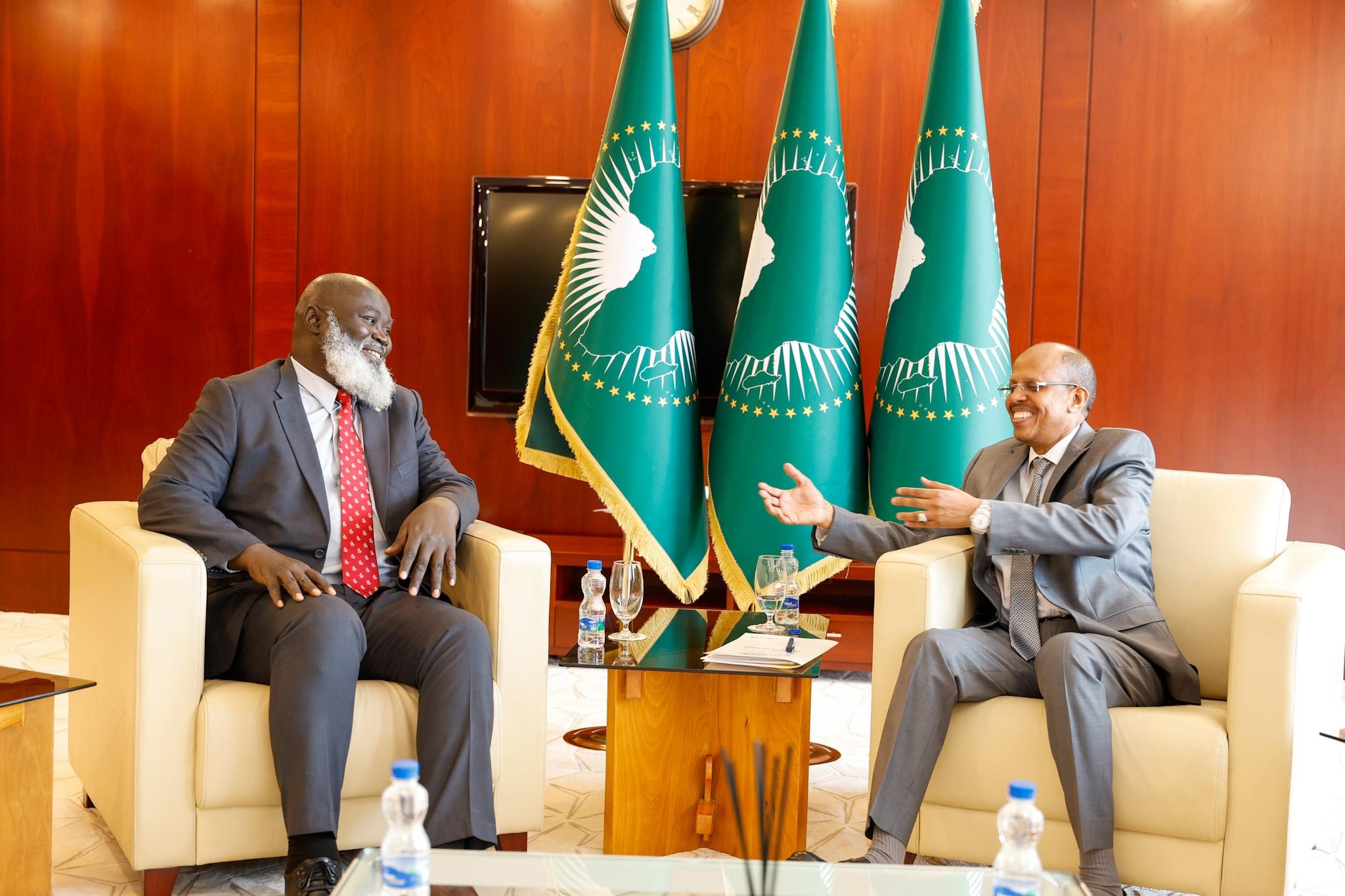
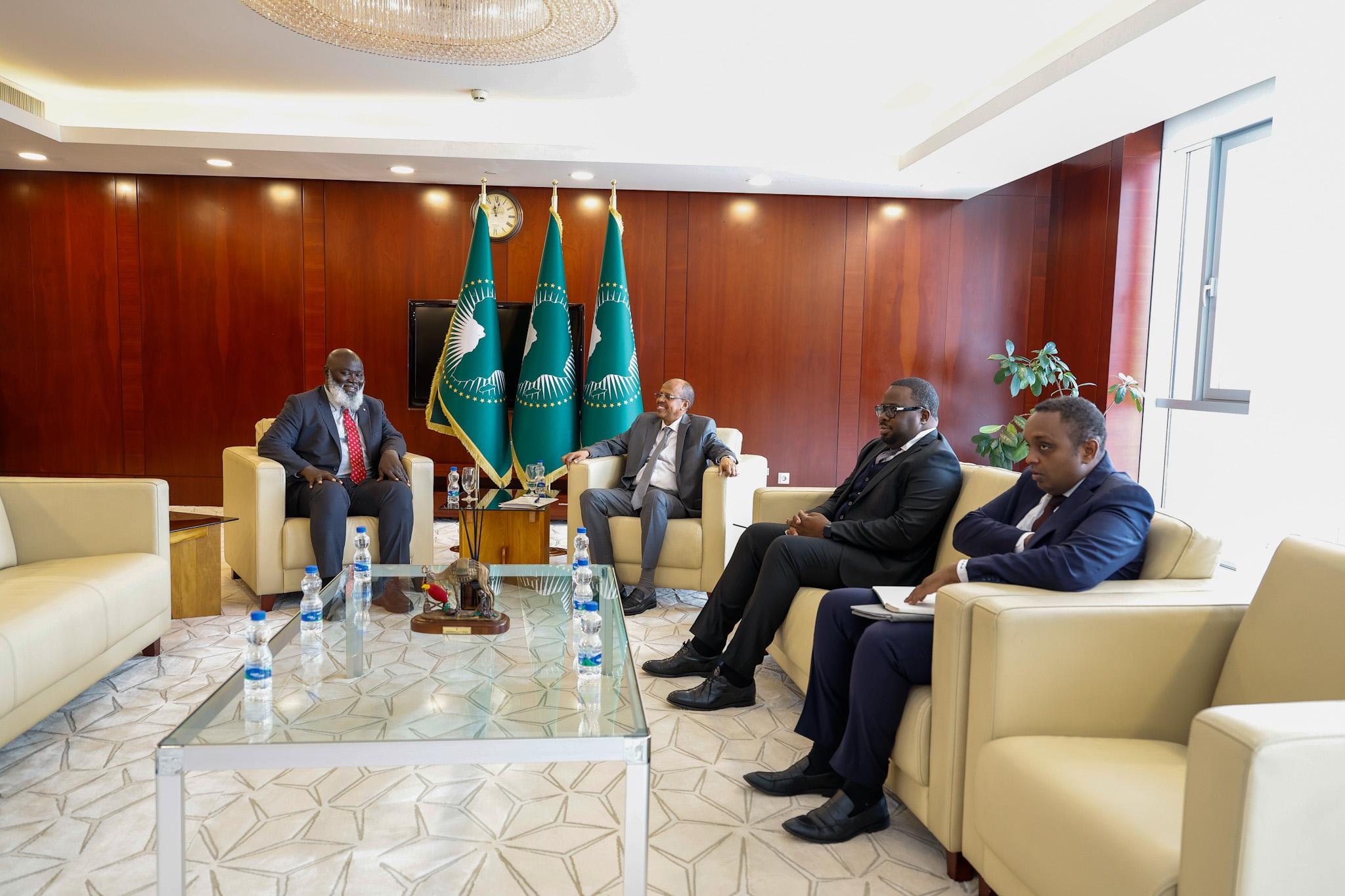
H.E. Ambassador El Hadji Ibrahima Diene, Special Representative of the Chairperson of the African Union Commission for Somalia and Head of the African Union Support and Stabilization Mission in Somalia (AUSSOM), briefed the Chairperson of the AU Commission, H.E. Mahmoud Ali Youssouf, on the implementation of AUSSOM’s mandate and the latest security and political developments across Somalia.
During the briefing, Chairperson Mahmoud Ali Youssouf praised AUSSOM’s continued contribution to peace, security, and stabilization efforts in Somalia. He highlighted the Mission’s close cooperation with the Federal Government of Somalia and Troop Contributing Countries in protecting civilians, advancing stabilization initiatives, strengthening state institutions, and supporting the gradual, conditions-based transfer of security responsibilities to the Somali Security Forces.
“The dedication of AUSSOM continues to play a vital role in Somalia’s stabilization process,” the AU Chairperson noted, emphasizing the importance of maintaining momentum toward Somali-led security and governance.
Youssouf also paid tribute to the women and men serving under AUSSOM, commending their courage, professionalism, and sacrifice in challenging operational environments. He reaffirmed the African Union’s commitment to standing alongside Somalia as it works toward sustainable peace, long-term stability, and greater national self-reliance.
Warning Against Dependency
While welcoming the AU’s continued support, Somali statesman Abdisaid Muse Ali, Chairperson of the Lomé Security and Peace Forum and Somalia’s former Minister of Foreign Affairs and International Cooperation, urged Somali leaders to draw important lessons from Afghanistan’s political collapse.
According to Abdisaid, the key parallel between Afghanistan and Somalia is not their conflicts themselves but the behavior of political elites.
“In Kabul, leaders came to treat foreign troops, donor money, and diplomatic backing as permanent foundations of power,” he observed. “Patronage crowded out institution-building, corruption weakened public authority, and political factions competed for positions while the security system deteriorated beneath them.”
He argued that Somalia now risks following a similar trajectory if political leaders continue to assume that international military support, financial assistance, and diplomatic backing will remain indefinitely.
Instead of focusing on building durable national institutions, Abdisaid warned that political competition over constitutional arrangements, government appointments, and access to state resources has delayed the broader political settlement required to strengthen Somalia’s federal system and national security architecture.
His remarks come as African Union experts reportedly caution that a funding-driven reduction of international support could create dangerous security gaps, potentially allowing Al-Shabaab to regain strategic territory and disrupt key supply routes if Somali institutions are not sufficiently prepared to assume full responsibility.
Although stressing that Somalia’s history and conflict differ significantly from Afghanistan’s, Abdisaid emphasized that the strategic lesson remains highly relevant.
“For years, the Federal Government of Somalia has benefited from international security guarantees,” he noted. “But without stronger political consensus, trusted public institutions, and capable national security forces, the state could face significant challenges once those guarantees diminish.”
Kampala Summit Seen as Critical Opportunity
Looking ahead, Abdisaid said the planned Kampala Summit at the end of July should serve as a decisive moment for Somali leaders to address the country’s long-term security transition.
He specifically called on President Hassan Sheikh Mohamud to learn from the collapse of former Afghan President Ashraf Ghani’s government, arguing that external support can sustain a government for years but cannot substitute for inclusive politics, accountable governance, and resilient national institutions.